
During my teenage years, I displayed symptoms of addiction in my relationship with a video game’s virtual world. [1] Time spent away from the virtual world resulted in anxiety rooted in a fear of missing out which would turn to irritability and a compulsive desire to return. Fearing that my career prospects, social opportunities and academic performance would plummet as a result of this unhealthy relationship, I made a change:

‘The Dual Cycles of Addiction’ © James Driver, NetAddiction NZ
I uninstalled and avoided all games of the genre, ‘MMORPG’. These ‘Massively Multiplayer Online Role-Playing Games’ provide ‘complex virtual worlds’ for players to ‘endlessly inhabit’ [2: 67]; allowing for unique avatar customisation to create an emotional connection between the player and their controllable character.
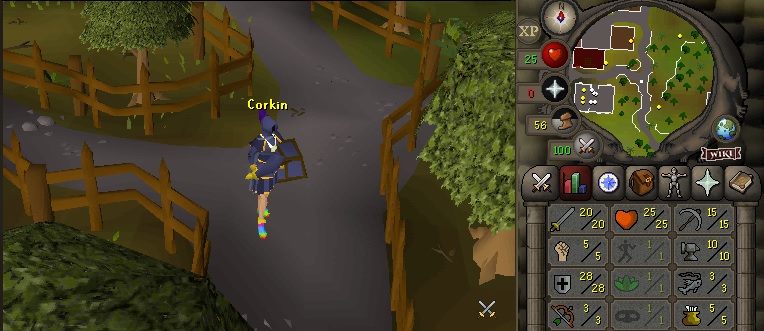
My experience started in 2007 with the browser game RuneScape (Jagex, 2001) and character progression became a conduit for social standing on the playground. Seeing my friends with mithril armour while my character was stuck with steel encouraged increased time levelling the avatar to avoid embarrassment and ridicule. MMORPGs are designed to allow ‘participation via ones’ character in a virtual society’. [3] However, being a low level restricted social experience as my friends, as MMO players, would ‘spend about the same amount of time talking about the game as [they] do playing’. [2: 86] As occurs with the relationship between youths and fads, the game faded into obscurity and friendships remained untarnished.
Nine years later, The Exiled Realm of Arborea (Krafton, 2011) or TERA tested my relationship with videogames again by providing an endless gameplay loop that could only be halted through player agency. [4: 118] Enjoying the game more than my real-world friends, my increased playtime led to my character becoming exceedingly strong in comparison as ‘activity in-game is devoted to increasing a character’s experience’. [5: 477]
My gameplay experience was hindered for two reasons, my options were:
- defeat enemies with ease turning previously engaging boss fights into tedious ones
- spend more time levelling additional characters and separate my solo experience
I opted for the second option. This resulted in a further increase in playtime but now the gameplay experience consisted of repetitive content across multiple characters instead of the developers’ intended narrative through coherent levelling. [5]
When my classmates stopped playing TERA, I was left with a game I still enjoyed, a cast of characters but nobody to play with. I joined a guild of experienced players based across Europe. Some of these players, I would consider to have an unhealthy relationship with TERA. [1]
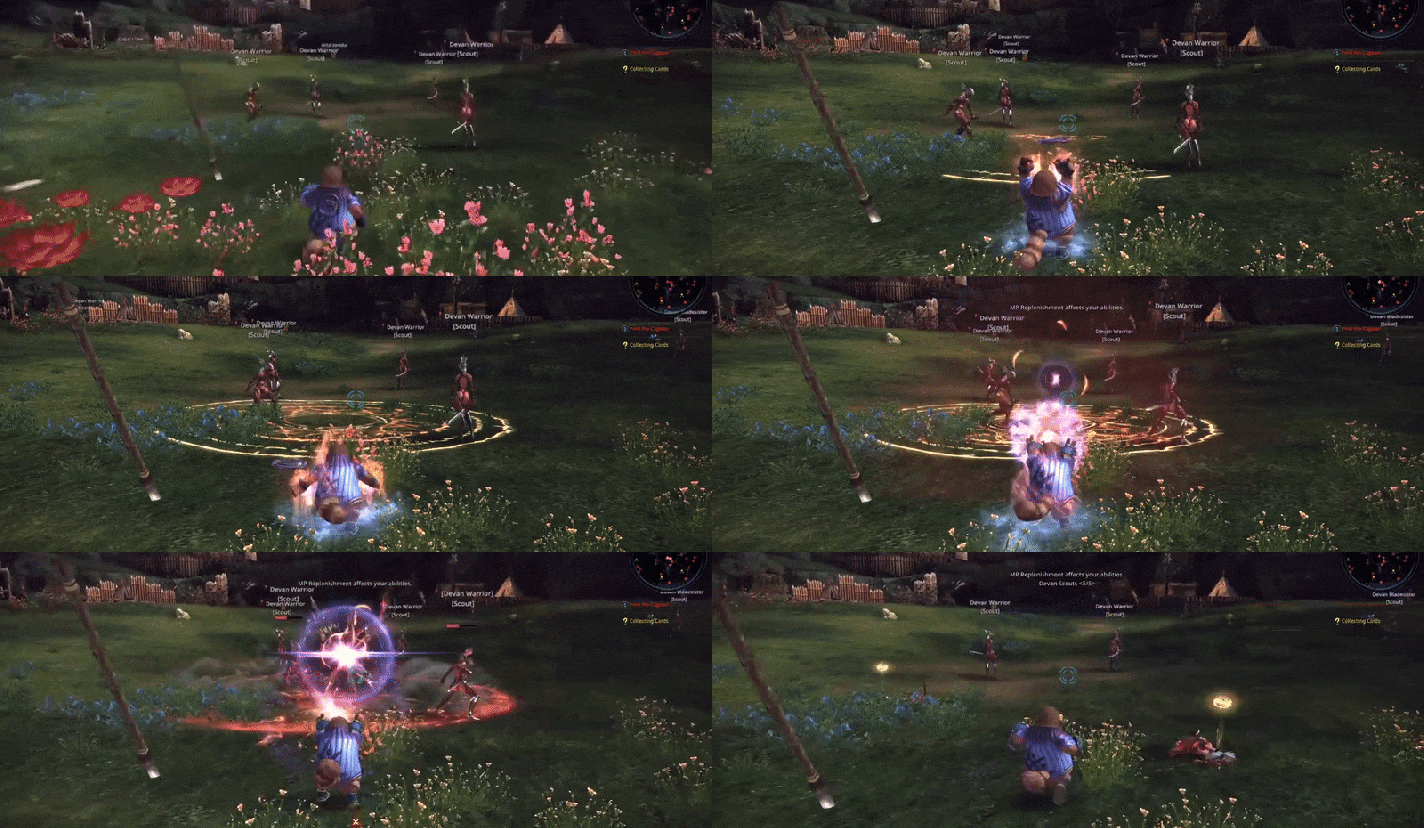
My daily routine soon revolved around the routine of TERA and my involvement in the guild. I turned to the guild’s social avenues which led to easier social engagement at the cost of a regular sleeping pattern and healthy living standards. [6: 6]
Alongside the social benefits, the addiction also came in part due to TERA’s vibrant world, engaging action-oriented combat and stunning enemy design. For addicts, ‘daily gameplay becomes effortless’. [2: 87] The progression system, earning high-end gear and sharing the experience with guildmates provided the rush that has led to the ‘DSM-5 including Internet gaming disorder in its research appendix’. [4: 117]
At some point playing TERA, my enjoyment plateaued and the time required to achieve that high became hollow. Many guildmates began playing other games or had to stop for real world responsibilities. As this happened, many guildmates were not interested in continuing a friendship outside of the game. The idea that their lives were so consumed by TERA that they would so easily abandon friends led to my own resignation in 2017.
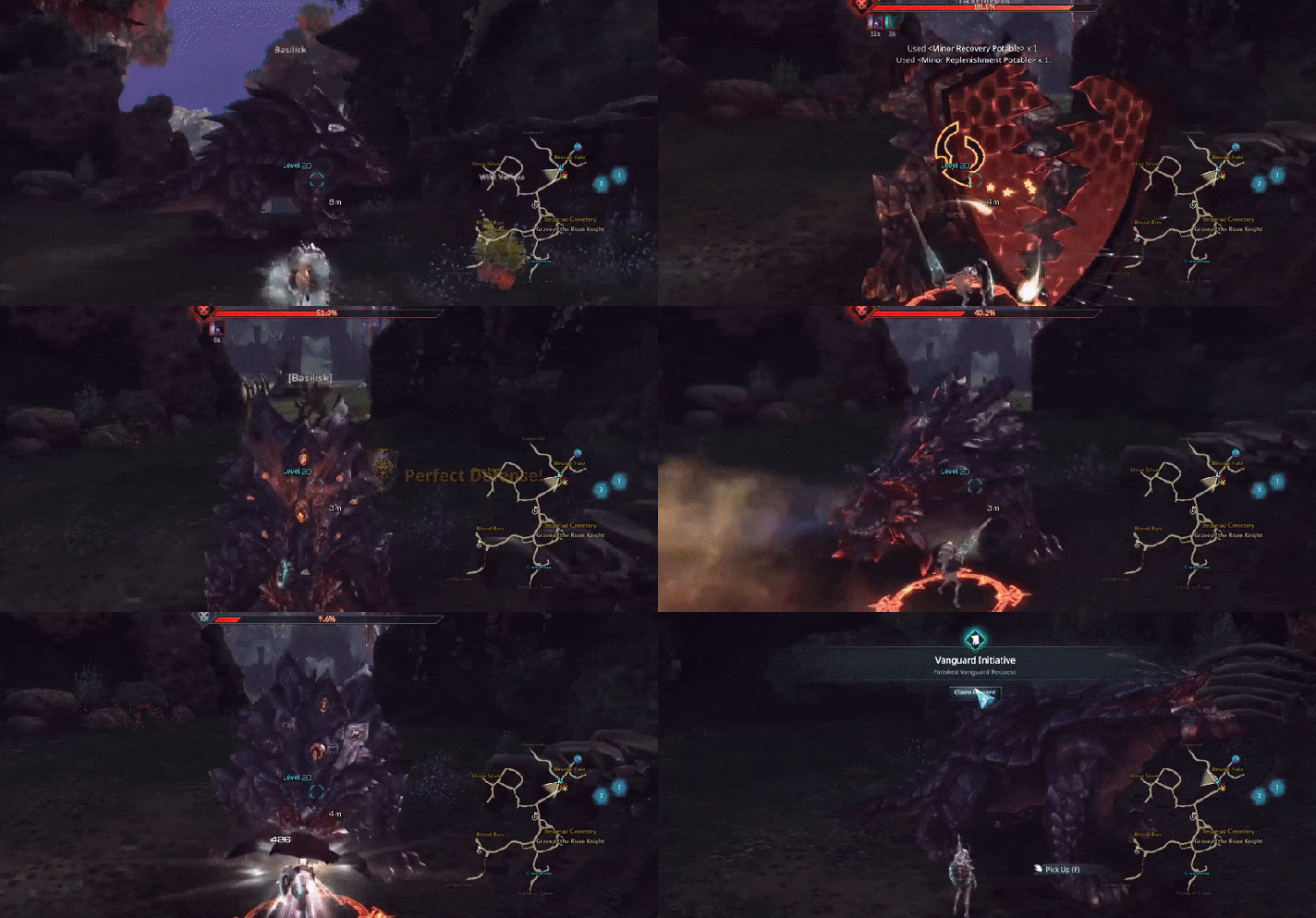
I have since experienced a healthy relationship with another MMORPG, Tree of Saviour (IMC Games, 2016) – an online experience to spend time with my long-distance girlfriend. However, as the game’s update calendar catered to dedicated players, we have since stopped playing. While I spent much less time in Tree of Saviour’s virtual world, I soon became a guild master and managed to balance online social interaction with my academic studies. For these reasons, unlike my experiences with TERA, I do not regret any of my time playing Tree of Saviour as I valued the enjoyment of myself and my guild members over the ‘immateriality’ of the gameplay loop. [7: 110]
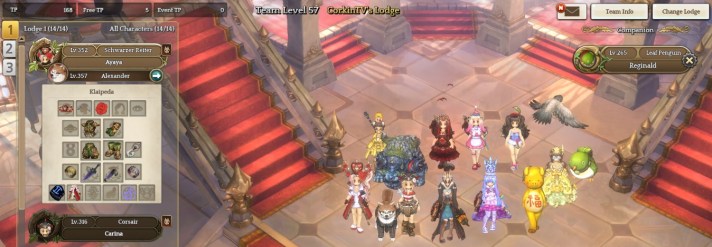
I revisited my account and here are my 10 characters with levels ranging from 200 – 357
Bibliography
[1] Driver, J. (2015) ‘What Is Addiction’, NetAddiction NZ, Available at: http://www.netaddiction.co.nz/whatisaddiction.html
[2] Boyns, D., Forghani, S. & Sosnovskaya, E. (2009) ‘MMORPG Worlds: On the Construction of Social Reality in World of Warcraft’, in Heider, D. (ed.), Living Virtually: Researching New Worlds, New York: Peter Lang Publishing Inc., pp. 67-92.
[3] Kolo, C., & Baur, T. (2004) ‘Living a Virtual Life: Social Dynamics of Online Gaming’, Game Studies: The International Journal of Computer Game Research, 4:1, Available at: http://www.gamestudies.org/0401/kolo/
[4] Whitty, M., & Young, G. (2017) ‘Online Gaming and Gambling’ in Cyberpsychology: The study of individuals, society and digital technologies, Chichester: John Wiley & Sons, Ltd., pp. 117-123
[5] Mulligan, J., & Patrovsky, B. (2003) Developing Online Games: An Insider’s Guide, New Riders. pp. 474-477.
[6] Munn, N. (2011) ‘The reality of Friendship Within Immersive Virtual Worlds’, Springer Science + Business Media, pp. 1-10.
[7] Newman, J., 2004, ‘Videogames, space and cyberspace: exploration, navigation and mastery’ in Videogames, London: Routledge, pp. 91-106.
 Critical Hit